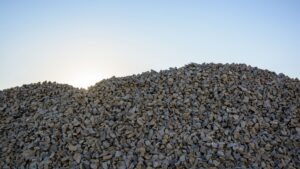
We may not realize it, but natural aggregates are the literal building blocks of our daily lives. On average, approximately 164 million tonnes of aggregates are used across Ontario each year, which equals about 14 tonnes per person. Every neighborhood, school, road, and commercial park starts with these essential raw materials.
So, how do we get from raw aggregate deposits to thriving local communities? It all begins in surface mined pits and quarries. Pits across Ontario are situated in areas where prehistoric glaciers left behind rich, high quality deposits of sand and stone. These natural resources are harvested, processed, and delivered directly to jobsites across the province to build the foundations of modern living.
4 Essential Materials That Build Our Neighborhoods
At Brock Aggregates, our locations supply a wide range of materials that directly shape Southern Ontario communities:
1. Granular A: Building Solid Foundations
Granular A is a precise mixture of sand and crushed gravel sized at 1 inch or smaller. Known for its high density when compacted, it acts as the essential base layer before laying down asphalt or concrete. It provides structural support for local roadways, highways, parking lots, residential driveways, walkways, and concrete building slabs.
2. Granular B: Supporting Heavy Infrastructure
Granular B contains a higher proportion of sand and larger gravel particles than Granular A. Serving as a durable subbase, it bears the structural weight beneath major roads, highways, and commercial developments. It is also a trusted backfill material used to stabilize concrete foundation walls for new homes and industrial facilities.
3. Cable Sand: Protecting Underground Utilities
Behind every modern neighborhood is a complex network of underground infrastructure. Cable Sand is a fine screened, stone free sand designed specifically to cushion and protect subterranean utility lines. It shields electrical cables, telecommunications lines, gas pipes, and water mains from shifting rocks and damage.
4. Sandfill: Essential Earthwork and Site Grading
Extracted directly from the source and utilized as is, Sandfill is an unscreened material used for large scale site preparation. It is used to fill low grade areas, level property for future construction, and backfill around sewer trenches, water mains, and building foundations.
Connecting Resources to Daily Life
Understanding where these products come from makes it easy to see how raw sand, stone, and gravel directly enable local growth. Beyond roadways and housing, mineral aggregates even support daily consumer products, like the calcium carbonate from limestone used in paint, glass, and chewing gum!
Take a look at this helpful graphic, courtesy of the Ontario Stone, Sand & Gravel Association (OSSGA), illustrating how aggregates build and support suburban communities:

We are fortunate to live in a province rich in natural resources that allow us to build strong, sustainable communities from the ground up. To learn more about our materials or arrange bulk delivery for your next project, visit brockaggregates.com or explore additional industry resources at GravelFacts.ca!